
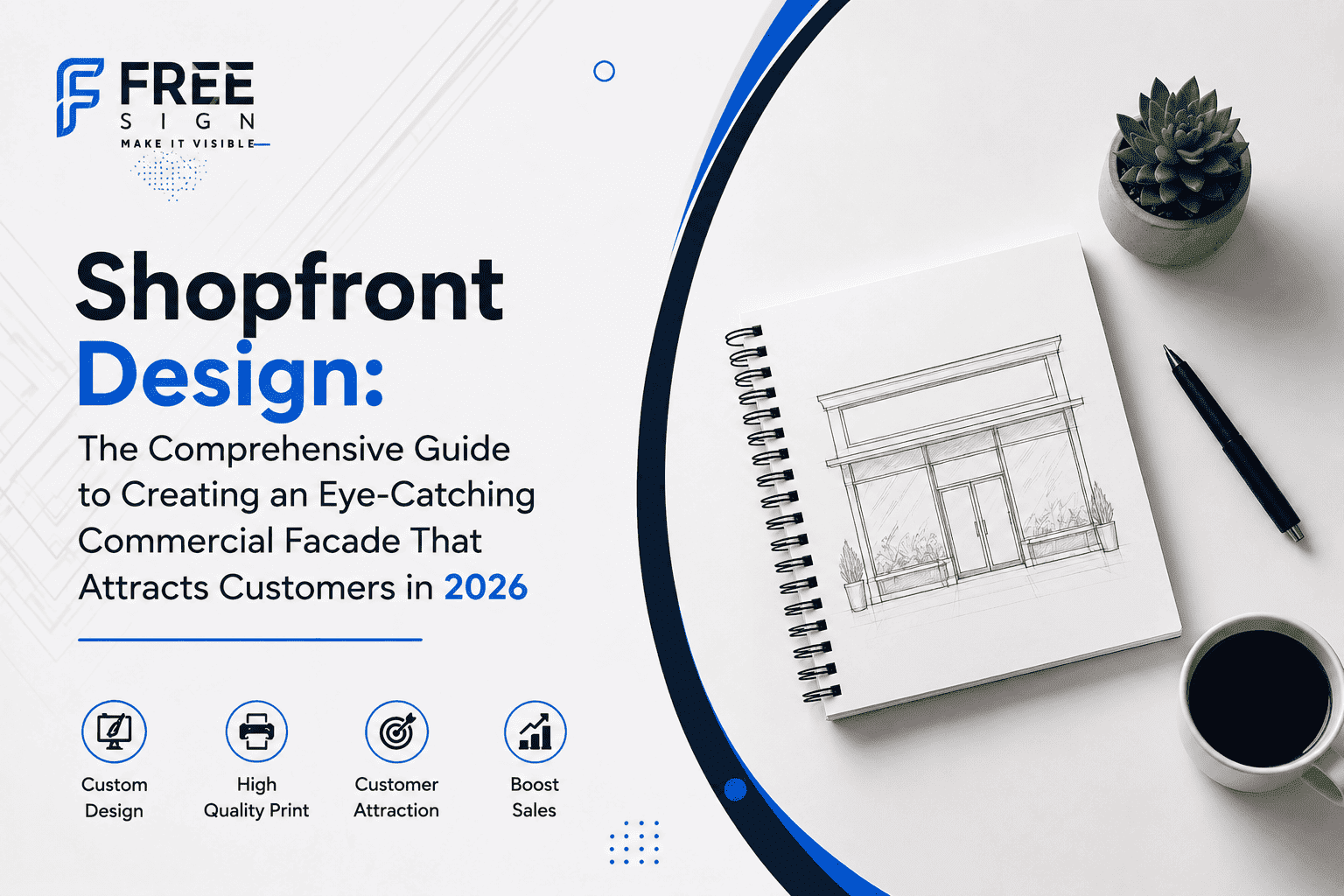
A commercial shopfront is the first thing a customer sees and the first element they use to judge the quality of what lies inside the store. In the modern business world, where competition is fierce and choices are abundant, shopfront design is no longer simply a matter of aesthetics. It has become a central marketing strategy that can determine the success or failure of a brand. Whether you are opening a store on a busy street or looking to renovate your existing storefront, understanding the fundamentals of facade design puts you on the right path toward attracting customers and building a strong brand.
Why Is the Storefront the Most Powerful Marketing Tool?
First Impressions Influence Decisions
Marketing experts say that customers need only three seconds to form a first impression of a commercial store. During these few seconds, customers do not read the product list or examine the prices. Instead, they look at the exterior storefront. An attractive and carefully designed facade sends an implicit signal that the products and services inside the store are of the same level of quality and professionalism. Conversely, a dull or poorly designed facade may cause potential customers to hesitate before taking a single step toward the door.
Marketing That Never Sleeps
A commercial storefront works like a marketing employee who never takes a vacation and never asks for a monthly salary. On busy streets, thousands of cars and pedestrians pass by your store every day. A distinctive storefront captures the attention of everyone passing by, whether early in the morning or in the middle of the night. This continuous exposure gradually builds brand awareness in a highly effective way.
Standing Out in a Crowded Market
Major cities are home to thousands of commercial stores across different sectors. Restaurants, cafés, retail stores, pharmacies, and clinics are all competing for the same customers. In such a competitive environment, standing out is not an option but an absolute necessity. An innovative storefront, whether it features a modern minimalist design, luxurious natural materials, or interactive technologies, can help distinguish your business from competitors.
Increasing Customer Entry Rates
Studies in the retail sector have shown that improving a store’s exterior can increase customer entry rates by up to 30%. This increase can translate into significant revenue growth over the long term. Investing in a professional storefront is not a luxury; it is a smart business decision that can generate substantial returns.
Elements of a Successful Storefront Design
Signage
Signage is the most prominent element of any commercial storefront. It should be clear and easy to read from a distance while accurately reflecting the brand identity. Signage options include illuminated 3D channel letters, acrylic signs, metal signs, and digital signage. The right choice depends on the type of business, budget, and location.
Glass Frontage
Glass gives a store a sense of openness and transparency. A wide glass frontage allows passersby to see inside the store, which can spark their curiosity and encourage them to enter. Laminated or full-glass designs can be used depending on the overall concept. Anti-reflective glass ensures clear visibility from outside.
Entrance
The entrance is the gateway through which customers enter your world. It should be clear, easily accessible, and reflective of the store’s character. A wide entrance creates a welcoming impression, while a narrow entrance may appear less inviting. Elements such as awnings, automatic glass doors, or luxurious wooden doors can be added depending on the nature of the business.
Lighting
Lighting is what transforms an ordinary storefront into an attractive destination. Exterior lighting, signage lighting, facade lighting, and entrance lighting are all elements that should be carefully planned. Warm lighting creates a sense of warmth and hospitality, while cool lighting conveys modernity and professionalism.
Colors and Materials
Colors evoke specific emotions. Blue suggests trust, red conveys energy, green represents growth, and gold suggests luxury. Color selection should be consistent with the brand identity. The materials used in the facade, whether wood, metal, stone, or glass, add a sensory dimension that influences the customer’s experience before they even enter the store.
Decorative Elements
Decorative elements can be added to give the storefront more personality, such as plants, awnings, artwork, or water features. These details make the facade more vibrant and visually appealing.
Types of Commercial Storefronts
Modern Facade
Modern facades feature clean lines, neutral colors, and materials such as glass, metal, and acrylic. They are suitable for contemporary restaurants, youth-oriented stores, and technology companies. They rely on simplicity and functionality combined with creative touches.
Classic Facade
Classic facades use natural materials such as stone, wood, and wrought iron. They are suitable for traditional restaurants, cafés, and stores seeking to create a sense of authenticity and warmth. They are characterized by rich details and intricate decorative elements.
Industrial Facade
Industrial facades rely on raw materials such as exposed brick, concrete, and unfinished metal. They are suitable for trendy restaurants, gaming lounges, and stores targeting younger audiences. They create a sense of authenticity and simplicity.
Luxury Facade
Luxury facades use premium materials such as marble, granite, bronze, and high-end wood. They are suitable for jewelry stores, watch boutiques, luxury perfume shops, and upscale restaurants. Every element of the facade is carefully selected to convey luxury and sophistication.
Interactive Facade
Interactive facades use modern technologies such as digital screens, smart lighting, and interactive elements. They are suitable for young and innovative brands seeking to provide customers with a unique experience.
Materials and Finishes in Storefront Design
Aluminum Composite Panel (ACP)
Aluminum composite panels are a very popular choice for commercial storefront cladding. They are lightweight, durable, and resistant to weather conditions. They are available in a wide range of colors and finishes and can be produced in virtually any color. For outdoor applications, it is recommended to use ACP with a thickness of at least 3 mm.
Stainless Steel
Stainless steel adds a luxurious and modern touch. It is resistant to rust and corrosion, making it ideal for outdoor applications. It can be used for 3D channel letters, frames, or decorative facade elements.
Glass
Glass gives the storefront a sense of openness and spaciousness. Standard glass, laminated glass, or tinted glass can be used. Anti-reflective glass ensures clear visibility from outside.
Stone and Marble
These natural materials add a sense of luxury and authenticity. They are highly durable and have a timeless appearance. They are suitable for luxury and classic storefronts.
Wood
Wood adds warmth and a natural character to the storefront. It can be used for frames, doors, or decorative elements. Treated and weather-resistant wood should be used for outdoor applications.
Acrylic
Acrylic is a lightweight material with significant design flexibility. It can be used for 3D channel letters, signs, or decorative elements. UV-resistant acrylic should be selected for outdoor applications.
Lighting: The Soul of a Commercial Storefront
Types of Lighting
- Ambient Lighting: General lighting that illuminates the entire storefront.
- Accent Lighting: Highlights specific elements such as signage or the entrance.
- Task Lighting: Illuminates specific areas such as a menu board or telephone number.
Lighting Sources
- LED: The most efficient and economical option, offering a long lifespan and a wide range of colors.
- Neon: Provides a soft and attractive glow, making it suitable for restaurants and cafés.
- Halogen: Produces bright illumination suitable for large storefronts.
- Solar Lighting: An environmentally friendly and economical option in the long term.
Lighting Strategies
- Warm lighting creates a sense of warmth and hospitality and is suitable for restaurants and cafés.
- Cool lighting conveys modernity and professionalism and is suitable for technology stores and clinics.
- Colored lighting adds energy and is suitable for youth-oriented brands.
- Dynamic lighting can be adjusted according to special occasions or different times of the day.
Color Psychology and Colors in Storefront Design
Color Meanings
| Color | Meaning | Suitable For |
| Red | Vitality, passion, urgency | Restaurants, sports stores |
| Blue | Trust, calmness, professionalism | Clinics, banks, companies |
| Green | Growth, health, nature | Pharmacies, healthy restaurants |
| Yellow | Optimism, energy, happiness | Entertainment stores, cafés |
| Black | Luxury, power, elegance | Jewelry stores, perfumes, luxury restaurants |
| Gold | Wealth, high quality | Hotels, upscale restaurants |
| White | Purity, simplicity, modernity | Modern stores, clinics |
6.2 Color Harmony
The storefront colors should be consistent with the brand identity. Using a cohesive color scheme helps build a strong visual memory among customers. Tools such as a color wheel can be used to select harmonious colors.
Storefront Design Based on Business Type
Restaurants and Cafés
A restaurant storefront should stimulate appetite and encourage customers to enter. It can include:
- Large glass windows showcasing the interior décor
- Warm and inviting lighting
- A simple sign indicating the type of cuisine
- Decorative elements such as plants or awnings
Retail Stores and Shops
A retail storefront should showcase products and attract attention:
- Wide glass frontage for displaying products
- Bright lighting highlighting the products
- A clear sign indicating the type of products
- Attractive colors that complement the nature of the products
Clinics and Medical Centers
A clinic storefront should convey trust and professionalism:
- Calm colors such as white and blue
- A clean and organized design
- Clear natural lighting
- A professional sign indicating the specialty
Pharmacies
A pharmacy storefront should be clearly visible:
- Illuminated green cross, a globally recognized symbol
- Bright lighting around the clock
- Glass frontage displaying the products
- A clean and professional design
Salons and Beauty Centers
A salon storefront should convey elegance and beauty:
- Feminine or modern colors
- Soft and attractive lighting
- Glass frontage showcasing the interior décor
- Elegant decorative elements
Licensing and Legal Standards
8.1 Municipal Licensing
Before implementing any commercial storefront design, municipal approval must be obtained. The procedures include:
- Submitting design plans
- Specifying materials and dimensions
- Obtaining the owner’s approval for tenants
- Paying the required fees
- Waiting for municipal approval
Standard Requirements
The storefront must comply with Saudi standard requirements, including:
- Structural safety
- Electrical safety
- Accessibility standards
- Height and projection restrictions
Safety Standards
- The storefront must be safe and must not pose a risk to pedestrians
- The materials used must be fire-resistant
- Lighting must not cause disturbance to neighboring properties
Storefront Design Implementation Stages
Stage One: Research and Analysis
- Understanding the nature of the business and target audience
- Studying the location and surrounding environment
- Analyzing competitors in the area
- Determining the budget and timeline
Stage Two: Preliminary Design
- Creating initial sketches
- Preparing 3D renders
- Selecting materials and colors
- Presenting the designs to the client and obtaining approval
Stage Three: Final Design
- Preparing shop drawings
- Conducting structural calculations
- Preparing the materials and quantities list
- Preparing the implementation schedule
Stage Four: Manufacturing
- Cutting and shaping materials in the workshop
- Painting and finishing the elements
- Installing lighting and electrical connections
- Conducting the final quality inspection
Stage Five: Installation
- Preparing the site
- Installing the structural framework
- Installing the storefront elements
- Installing lighting and electrical connections
- Final finishing and cleaning
Cost of Designing and Implementing Storefronts
The cost varies depending on several factors:
| Factor | Impact on Cost |
| Storefront Size | The larger the area, the higher the cost |
| Material Type | Stone and marble are more expensive than cladding |
| Design Complexity | Complex designs require more time and effort |
| Lighting | Smart and interactive lighting is more expensive |
| Location | Difficult-to-access locations may require specialized equipment |
Estimated Price Ranges
- Simple storefront (cladding + sign): SAR 5,000–15,000
- Medium storefront (3D letters + glass + lighting): SAR 15,000–40,000
- Luxury storefront (stone + marble + customized materials): SAR 40,000–100,000+
Common Storefront Design Mistakes
Mistake One: Neglecting Brand Identity
The storefront should reflect the brand identity. Using colors or fonts that do not align with the brand identity can create confusion among customers.
Mistake Two: Overly Complicated Design
Simplicity is the key to beauty. A storefront overloaded with elements and colors can look chaotic and unattractive. Focus on a few impactful elements.
Mistake Three: Neglecting Lighting
Poor lighting can ruin an otherwise beautiful storefront. Lighting should be planned from the beginning rather than treated as an afterthought.
Mistake Four: Using Inappropriate Materials
Using low-quality or unsuitable materials for the climate can lead to rapid deterioration of the storefront. Invest in quality materials from the beginning.
Mistake Five: Failing to Consider Accessibility
The storefront should be easily accessible to all customers, including people with disabilities.
Global Storefront Design Trends for 2026
Trend One: Sustainability
Using eco-friendly materials and energy-efficient technologies. This trend aligns with Saudi Vision 2030.
Trend Two: Technology and Interactivity
Adding digital screens, smart lighting, and interactive elements makes the storefront dynamic and constantly changing.
Trend Three: Modern Minimalism
Minimal designs with clean lines and neutral colors. This trend allows the brand to stand out.
Trend Four: A Return to Nature
Using natural materials such as wood, stone, and plants. This trend adds warmth and a human touch to the storefront.
Trend Five: Customization
Customized storefronts that uniquely reflect the personality of the brand. There are no ready-made solutions; instead, designs are created specifically for each business.
Discover: Why Are Professional Signs Important for Creating the First Impression of Your Brand?
Why Choose Free Sign Establishment to Design Your Storefront?
After exploring all aspects of storefront design, the key question is: why choose Free Sign Establishment as your partner for this vital project?
Deep Local Experience
Free Sign Establishment was established in 2020 in Jeddah. Over the years, we have built extensive practical experience in the local market. We do not provide ready-made solutions imported from abroad. Instead, we design customized storefronts suited to the nature, culture, and climate of Jeddah. We know Jeddah’s streets, understand the requirements of the local municipality, and know what captures the attention of Jeddah’s residents and visitors.
Comprehensive Services Under One Roof
We provide everything you need from start to finish: initial consultation, creative 3D design, in-house manufacturing at our workshop equipped with the latest laser cutting and CNC technology, licensing, professional installation, and regular maintenance. This means you deal with one company responsible for the entire project.
Materials Guaranteed for the Saudi Climate
We use only UV-resistant materials, high-quality LED lighting, and rust-resistant metal structures. We ensure that your storefront can withstand Jeddah’s heat and humidity for years to come.
Specialized and Professional Team
Our team includes creative designers, engineers, and certified installation technicians. Every member brings their expertise and passion to your project.
Competitive and Transparent Pricing
We offer competitive prices suitable for different budgets while maintaining high quality standards. Our quotations are detailed and transparent, with no hidden fees.
Fast Execution
We adhere to agreed deadlines and work efficiently to ensure that your project is delivered on time.
Diverse Portfolio
We have worked with local and international brands, from DHL and JOTUN to small businesses across different neighborhoods in Jeddah.
Frequently Asked Questions
How long does it take to design and implement a storefront?
It typically takes between two weeks and one month, depending on the complexity of the project.
Can an old storefront be renovated?
Yes. A storefront can be partially or completely renovated depending on its condition and budget.
What is the best material for a storefront in Jeddah?
Cladding and stainless steel are among the best options due to their resistance to heat and humidity.
Do you provide regular maintenance services?
Yes, we provide comprehensive regular maintenance packages.
Can you design a storefront that matches my brand identity?
Absolutely. Our design team creates a storefront that perfectly aligns with your brand identity.
Conclusion
Designing a commercial storefront is a strategic investment that can determine the success of your business. An attractive and carefully designed storefront reflects your brand identity and continuously attracts customers. Do not leave this crucial step to chance. Choose a professional partner who understands your vision and helps you bring it to life.
One thought on “Shopfront Design: The Comprehensive Guide to Creating an Eye-Catching Commercial Facade That Attracts Customers in 2026”