
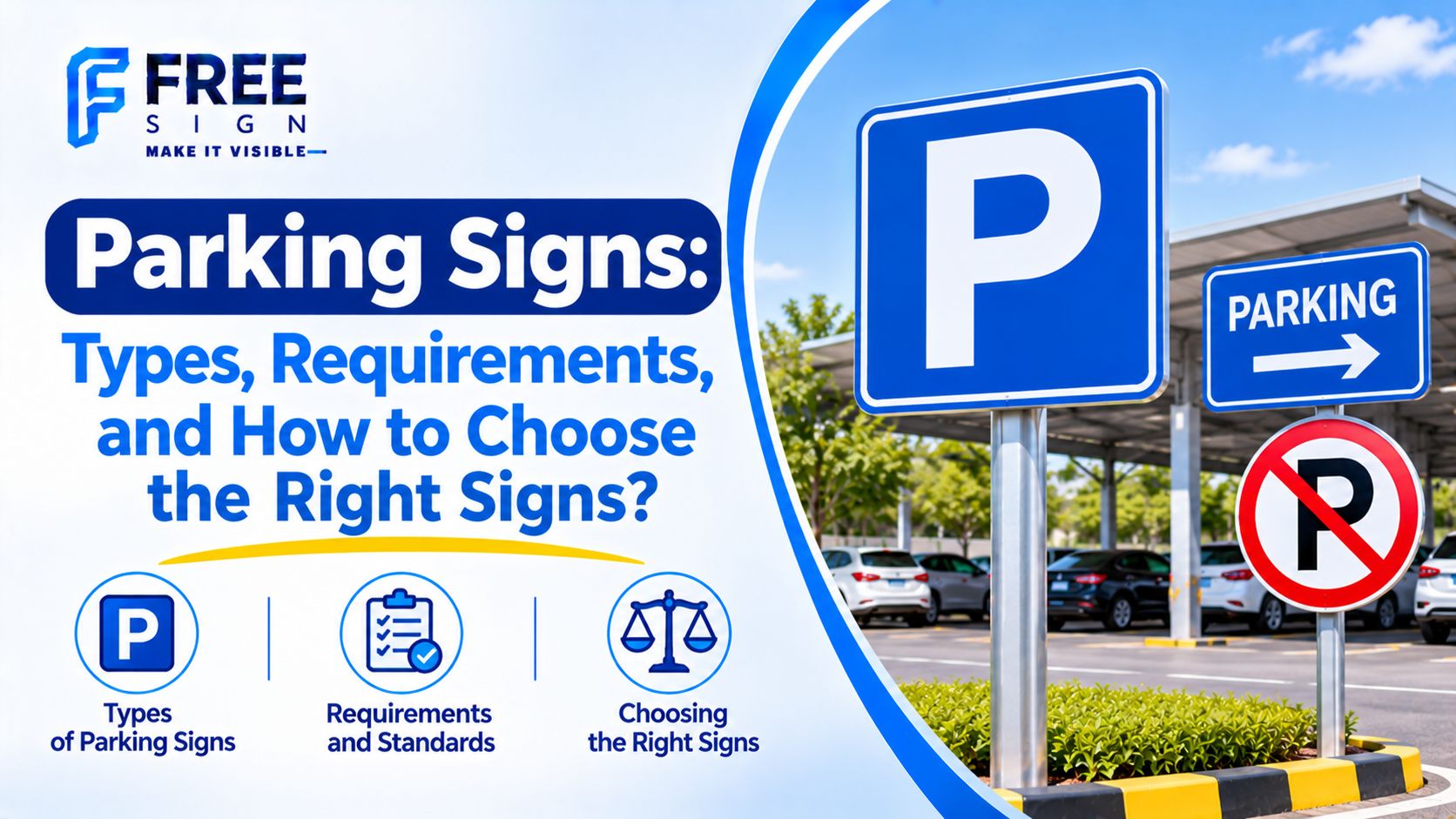
A well-organized parking area depends on more than available space. Drivers need clear instructions to find entrances, exits, available spaces, and designated parking areas without confusion. This is where Parking Signs play an essential role. They help manage vehicle movement, improve safety, and make parking facilities easier to navigate. Whether you manage a commercial building, shopping center, office, hospital, or residential complex, choosing the right signs can create a more organized experience for visitors and employees.
Why Are Parking Signs Important?
Parking Signs help drivers understand how to use a parking facility safely and efficiently. Without clear signs, visitors may enter through the wrong access point, park in restricted areas, or struggle to find their destinations.
A well-planned signage system provides several benefits:
- Improved traffic flow: Directional signs guide vehicles toward entrances, exits, ramps, and available parking spaces.
- Better safety: Warning and restriction signs help reduce confusion and prevent unnecessary vehicle movements.
- Easier navigation: Floor numbers, section labels, and parking space numbers help visitors locate their vehicles.
- Clear parking rules: Signs communicate restrictions, reserved spaces, and designated parking areas.
- A more professional appearance: Consistent signage creates a more organized environment and supports the visual identity of a business or facility.
For large parking facilities, signs should work as one connected system. Each sign should provide the right information at the right location, rather than displaying unnecessary instructions.
Read also: Installing Raised Letters for Commercial Storefronts
What Are the Main Types of Parking Signs?
Different parking areas require different types of signs depending on their size, layout, traffic volume, and users. Understanding the available options helps you select a practical signage system.
1. Parking Entrance and Exit Signs
Entrance and exit signs identify the correct access points for vehicles. They are particularly important in shopping centers, commercial buildings, hospitals, and multi-level parking facilities.
These signs should be visible before drivers reach a turning point or barrier. Where entrances and exits are located close to each other, clear labels help prevent vehicles from entering through the wrong lane.
Common examples include:
- Parking Entrance
- Parking Exit
- Entry Only
- Exit Only
- Authorized Vehicles Only
Using recognizable symbols alongside written instructions can make these signs easier to understand.
2. Directional Parking Signs
Directional signs guide drivers through the parking facility and help them reach their destinations without unnecessary turns.
They may include arrows, floor numbers, section names, and directions to specific areas. For example, a parking facility may use signs to direct visitors toward visitor parking, employee parking, elevators, payment machines, or building entrances.
For larger facilities, directional signs should be placed at important decision points, such as intersections, ramps, and changes in direction.
3. No Parking and No Stopping Signs
Restriction signs communicate where vehicles are not allowed to park or stop. They help keep access routes clear and prevent vehicles from blocking entrances, emergency exits, loading areas, and pedestrian paths.
Common examples include:
- No Parking
- No Stopping
- Reserved Parking
- Loading and Unloading Only
- Emergency Access – Keep Clear
The wording and symbols should be clear and consistent with the applicable traffic and safety requirements.
4. Accessible Parking Signs
Accessible parking signs identify spaces designated for people with disabilities. These spaces should be easy to recognize and located in suitable areas according to applicable accessibility requirements.
The signs commonly use the internationally recognized accessibility symbol. Depending on the facility and applicable regulations, additional information may be required to identify the designated space.
When planning accessible parking, consider both the sign and the surrounding layout. The parking space, access aisle, pedestrian route, and nearby entrance should work together to provide a practical and accessible experience.
5. Parking Space Number and Floor Signs
Numbering signs make it easier for visitors to remember where they parked and return to their vehicles.
In multi-level parking facilities, floor identification signs are especially useful. Each level can have a distinct number, letter, color, or combination of identifiers.
For example, a facility may use:
- Level B1 for the first basement floor.
- Level B2 for the second basement floor.
- Level G for the ground floor.
- Sections A, B, and C to divide large parking areas.
- Individual numbers to identify parking spaces.
A consistent numbering system helps visitors navigate the facility and can also support parking management operations.
6. Speed Limit and Warning Signs
Warning signs help drivers recognize potential hazards and adjust their behavior accordingly. They are particularly useful in areas with limited visibility, pedestrian movement, ramps, and narrow lanes.
Examples include:
- Speed Limit
- Slow Down
- Pedestrian Crossing
- Low Clearance
- Slippery Surface
- Watch for Pedestrians
These signs should be positioned where drivers have enough time to notice the message and respond safely.
Learn more: How to Install Cladding Facades
What Materials Are Used to Make Parking Signs?
The material used for Parking Signs affects their durability, appearance, visibility, and suitability for indoor or outdoor installation. The right choice depends on the installation environment and the expected level of exposure.
Aluminum Signs
Aluminum is a common option for permanent parking signs because it is lightweight, durable, and suitable for many indoor and outdoor applications.
It can be printed, finished, and shaped to suit different designs. Aluminum signs are often used for directional instructions, parking restrictions, entrance signs, and general information.
Acrylic Signs
Acrylic offers a clean, modern appearance and is available in different colors, thicknesses, and finishes. It can be suitable for indoor parking facilities, commercial buildings, and locations where appearance is an important consideration.
Acrylic can also be combined with lighting to create illuminated signs, depending on the design and installation requirements.
Vinyl Stickers and Printed Graphics
Vinyl stickers are useful for applying information to walls, columns, doors, and other suitable surfaces.
They can display parking numbers, directional arrows, floor labels, and warning messages. Vinyl graphics are particularly practical when a facility needs to update or add information without installing a separate rigid sign.
Forex and Other Lightweight Materials
Forex is a lightweight PVC-based material that can be used for indoor signs and temporary or semi-permanent applications.
It is suitable for printed graphics and different shapes. However, the installation environment and expected lifespan should be considered before selecting it for outdoor use.
Reflective and Illuminated Materials
Reflective materials help signs remain visible when illuminated by vehicle headlights. They can be useful in areas with limited lighting or where drivers need to identify instructions from a distance.
Illuminated signs may also be suitable for entrances, exits, and important directions in larger facilities. Their design should account for visibility, electrical requirements, maintenance, and the surrounding lighting conditions.
Read also: Modern Shopfront Design
How Do You Choose the Right Parking Signs?
Choosing suitable Parking Signs requires more than selecting a design or material. You need to consider how drivers use the facility and what information they need at each stage of their journey.
1. Consider the Type of Parking Facility
Start by identifying the purpose and layout of the parking area.
A small business parking lot may only need entrance signs, reserved parking signs, and a few directional instructions. A shopping center or hospital may require a more detailed system covering multiple entrances, floors, accessible spaces, pedestrian routes, and service areas.
The larger and more complex the facility, the more important it becomes to plan the signage system as a whole.
2. Choose the Right Size and Visibility
A sign should be large enough for drivers to read from an appropriate distance. Its size depends on the location, viewing angle, vehicle speed, and amount of information displayed.
For example, a sign placed at a parking entrance may need to be visible from farther away than a parking number attached to a wall beside an individual space.
Avoid overcrowding signs with too much text. Short instructions, clear arrows, and recognizable symbols are often more effective.
3. Use Clear Colors and Symbols
Colors and symbols help drivers understand instructions quickly. A consistent visual system makes it easier to distinguish directional information, restrictions, warnings, and designated parking spaces.
Where necessary, use symbols alongside text rather than relying on written instructions alone. This can improve understanding for visitors who speak different languages.
For facilities in Saudi Arabia, consider the need for Arabic and English information, particularly in commercial locations that receive visitors from different backgrounds.
4. Select Materials Based on the Environment
Indoor and outdoor signs do not always require the same materials.
Outdoor signs may need to withstand sunlight, heat, dust, and changing weather conditions. Indoor signs may place greater emphasis on appearance, lighting, and compatibility with the building’s design.
Before selecting a material, consider:
- Whether the sign will be installed indoors or outdoors.
- Exposure to sunlight, moisture, and dust.
- Expected lifespan and maintenance needs.
- Printing quality and finishing options.
- The installation surface and fixing method.
5. Plan the Placement of Every Sign
Even a well-designed sign may be ineffective if it is installed in the wrong location.
Place directional signs before drivers reach intersections or turning points. Position entrance and exit signs where they can be seen before vehicles approach access lanes. Install floor and section labels where visitors can easily identify them.
Also consider pedestrian movement. Visitors should be able to find elevators, stairs, payment areas, and building entrances without walking through vehicle routes unnecessarily.
6. Check Applicable Standards and Requirements
Parking signage should be planned with relevant local regulations, accessibility requirements, and safety guidelines in mind.
In Saudi Arabia, parking facility design guidance addresses matters such as directional signs, floor identification, pedestrian movement, and accessible parking. The exact requirements may vary according to the type of facility and the applicable regulations.
For this reason, review the relevant official guidance before finalizing the design and installation.
What Makes High-Quality Parking Signs Effective?
A good parking sign communicates its message clearly, remains visible in its intended location, and maintains its appearance over time.
Consider the following characteristics when reviewing a design:
| Feature | Why It Matters |
| Clear wording | Helps drivers understand instructions quickly |
| Recognizable symbols | Makes information easier to interpret |
| Suitable size | Improves visibility from the required distance |
| Durable materials | Supports long-term use |
| Appropriate colors | Helps distinguish different sign categories |
| Professional finishing | Creates a consistent appearance |
| Secure installation | Keeps signs stable and properly positioned |
Consistency is also important. Using different fonts, colors, arrow styles, and numbering systems throughout one facility can make navigation confusing. A unified design helps visitors recognize and follow the signs more easily.
How Are Parking Signs Designed and Installed?
Producing an effective signage system usually involves several stages. Planning these stages carefully helps ensure that the final signs match the facility’s requirements.
1. Site assessment: The parking layout is reviewed to identify entrances, exits, traffic routes, pedestrian areas, and important decision points.
2. Signage planning: The required sign types, locations, dimensions, and messages are determined according to the facility’s needs.
3. Design preparation: Colors, fonts, symbols, arrows, and numbering are organized into a consistent visual system.
4. Material selection and production: Suitable materials and printing or manufacturing methods are selected for the installation environment.
5. Installation: Signs are fixed in their planned locations using appropriate mounting methods.
6. Final review: Visibility, readability, placement, and consistency are checked to identify any issues that need correction.
A professional assessment before production can help reduce unnecessary signs and avoid placement problems that may affect the facility’s operation.
How Much Do Parking Signs Cost?
The cost of Parking Signs depends on several factors, so there is no single price that applies to every project.
The main factors include:
- Number of signs: Larger facilities usually require more signs and a wider range of designs.
- Dimensions: Larger signs generally require more material and production work.
- Material: Aluminum, acrylic, Forex, vinyl, and reflective materials have different costs.
- Printing and finishing: Custom colors, graphics, special finishes, and complex designs can affect the final price.
- Lighting: Illuminated signs may involve additional electrical components and installation requirements.
- Installation: The location, mounting method, and accessibility of the installation area can influence the overall project cost.
To receive an accurate quotation, provide the signage company with the parking layout, approximate number of signs, preferred materials, and any specific design or installation requirements.
Why Choose Free Sign for Parking Signs?
A successful parking signage project requires more than producing individual signs. It involves understanding the facility’s layout, identifying the information visitors need, and creating a consistent system that supports safe and convenient movement.
Free Sign provides signage and visual identity solutions for businesses and commercial projects in Saudi Arabia. Its services include different types of advertising and directional signs, allowing businesses to explore signage solutions according to their project requirements.
When planning a parking signage project, it is useful to discuss the intended sign locations, dimensions, materials, design preferences, and installation needs before production begins.
You can contact Free Sign to discuss your project and request a quotation based on the requirements of your parking facility.
Learn more about Free Sign’s Recent Projects
Frequently Asked Questions About Parking Signs
What types of Parking Signs does a commercial building need?
A commercial building may need entrance and exit signs, directional arrows, parking restrictions, accessible parking signs, floor identification, parking space numbers, and pedestrian direction signs. The exact selection depends on the building’s size and parking layout.
Can Parking Signs include a company logo?
Yes. Custom Parking Signs can include a company logo, brand colors, and other visual identity elements, provided that branding does not reduce the visibility or clarity of essential instructions.
Are illuminated Parking Signs necessary?
Not every parking facility needs illuminated signs. However, they may be useful at entrances, exits, and important decision points in areas with limited lighting or where additional visibility is required.
What is the best material for outdoor Parking Signs?
The best material depends on the installation conditions, expected lifespan, and design requirements. Aluminum and suitable reflective materials are common options for outdoor applications because they can provide durability and visibility when properly specified and installed.
How can parking spaces be numbered effectively?
Use a consistent system based on floors, sections, and individual space numbers. Make sure that the numbering is easy to read and that visitors can identify the same labels on directional signs and parking area markers.
Conclusion
Parking Signs are an essential part of an organized and safe parking facility. From entrance and exit signs to directional instructions, accessible parking markers, and space numbers, each sign should help drivers and pedestrians understand where to go and what to do.
The best results come from choosing suitable materials, using clear designs, planning sign locations carefully, and considering the facility’s operational and safety requirements.
If you are planning a new parking signage project or upgrading an existing facility, contact Free Sign to discuss your requirements and explore suitable signage solutions for your space.