
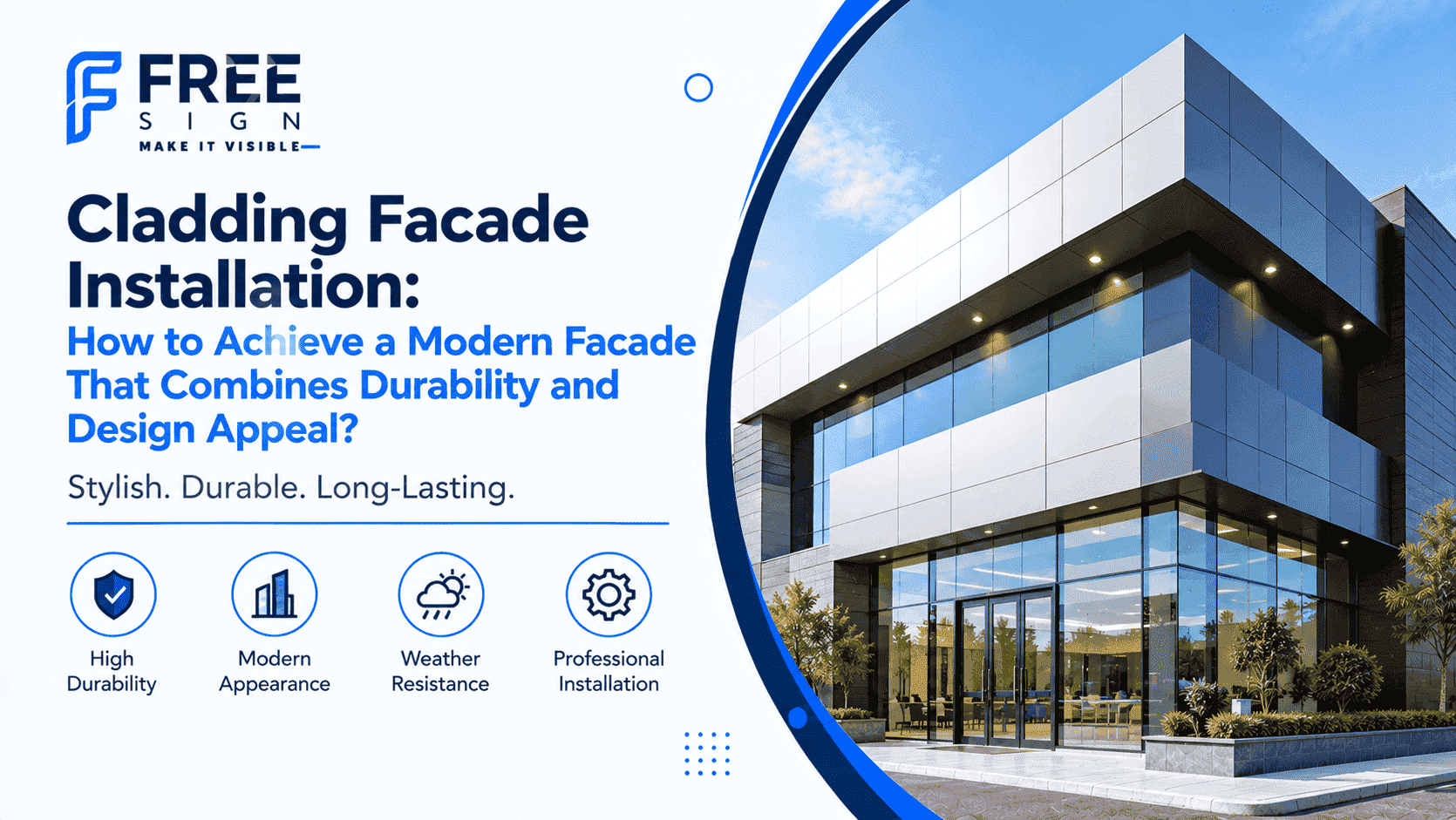
Have you ever noticed a building on a commercial street in Riyadh or Jeddah that immediately catches your attention? Often, the reason is not the size or location of the building, but its facade: the shine of the colors, precise edges, and the reflection of light on smooth surfaces can make a building look as if it was designed yesterday, even years after it was constructed. This is exactly what cladding facades can achieve when professionally installed. In this article, we will take you through a comprehensive guide covering everything from the definition and types of cladding to the price per square meter, installation stages, and common mistakes to avoid, helping you make a clear and confident decision for your next project.
What Is Cladding and Why Has It Become the First Choice for Facades in Saudi Arabia?
Cladding is an exterior facade system used to cover buildings with a protective and aesthetic layer at the same time. The most common type relies on Aluminum Composite Panels (ACP), also known as Aluminum Composite Material. Each panel consists of two outer aluminum sheets surrounding an inner layer made of polyethylene or a fire-resistant core. This construction gives the panels a lightweight yet highly rigid structure capable of withstanding changing weather conditions. Why has cladding become such a popular choice in Saudi Arabia? The answer lies in the country’s climate: temperatures exceeding 45°C in summer, dust and sand during several seasons of the year, and heavy rainfall in some regions. Aluminum does not rust like iron, does not crack like traditional paint, and can maintain its color for long periods when the right material is selected. It can also be cleaned quickly with water and soap. These advantages have made cladding facade installation a natural choice for commercial stores, companies, residential buildings, malls, and other properties in major cities such as Riyadh, Jeddah, Dammam, and Khobar.Types of Cladding Panels: Know the Differences Before Requesting a Quote
One of the most common mistakes project owners make is requesting a price without knowing the type of panel that will be installed on their building facade. The different types vary significantly in quality, price, and safety, and these differences directly affect the lifespan and safety of the facade.1. Aluminum Composite Panels (ACP)
This is the most widely used type in the Saudi market. It is available in overall panel thicknesses of 3 mm and 4 mm, while the aluminum skin thickness typically ranges from 0.12 mm to 0.50 mm. The golden rule here is simple: the thicker the aluminum skin, the greater the durability and color stability, and the higher the price. Panels with thinner aluminum skins may be suitable for temporary signage, while for permanent facades, an aluminum skin thickness of at least 0.30 mm is generally preferred.2. Fire-Resistant and Non-Combustible Cladding Panels
This category uses a mineral or chemically modified core designed to limit flame spread and includes fire-performance classifications such as FR-B1 and A2. In public buildings, major commercial properties, and malls, authorities may impose specific requirements regarding the types of panels used. Therefore, always ask for a fire-resistance certificate before signing a contract. This is one of the questions that can distinguish a professional contractor from one focused only on quick profits.3. Solid Aluminum Panels
An excellent alternative for premium projects, solid aluminum panels can have a full aluminum thickness of 2 or 3 mm. They are more expensive than composite panels but offer better resistance to impacts and scratches. They are commonly used for high-end facades and main entrances of hotels and corporate headquarters.4. Panels With Special Finishes
Cladding is available in a variety of finishes to suit your preferences and project requirements:- Metallic Finish: One of the most popular choices for modern commercial facades.
- Glossy / Matte Colors: Available in solid high-gloss or matte finishes.
- Mirror Finish: Suitable for interior decoration and entrances.
- Wood & Marble Finish: Ideal for achieving a natural appearance while retaining the benefits of aluminum.
- Spectra / Sparkling Finishes: Their appearance changes with the viewing angle, creating a highly luxurious look for distinctive buildings.
Benefits of Cladding Facades That Make Them an Investment Rather Than an Expense
When cladding is compared with traditional paint or natural stone, it stands out as a practical option that combines a modern appearance, easy installation, and convenient maintenance. Its importance is even greater in Saudi projects that require facades capable of withstanding demanding weather conditions while maintaining their appearance for years.- Durability and Long Lifespan: High-quality cladding panels, particularly those equipped with UV-resistant PVDF coatings, can maintain their color and appearance for extended periods when the right product is selected and properly installed.
- Moisture and Corrosion Resistance: The aluminum used in cladding panels offers good resistance to moisture and corrosion, making it suitable for coastal cities such as Jeddah and Dammam, provided materials appropriate for the site conditions are selected.
- Lightweight Construction: Cladding panels are lighter than many facade-cladding materials, such as stone and certain concrete finishes. This can help reduce structural loads and simplify installation.
- Improved Thermal and Acoustic Insulation: A facade system, including its cavities and insulation materials when used, can help reduce heat and noise transmission, which is particularly important for buildings in hot climates.
- Fast Installation: The lightweight nature of the panels and their installation method can help cover large areas in less time than some traditional cladding systems, contributing to shorter project timelines.
- Design Versatility: Cladding panels are available in a wide range of colors and finishes. They can also be shaped and cut to create different geometric designs, combine multiple colors, and integrate with lighting and other architectural elements.
- Easy Cleaning and Maintenance: The smooth surfaces of cladding panels are easy to clean and maintain, provided that suitable cleaning methods and products are used for the specific coating and finish.
- Easy Replacement of Damaged Panels: If a panel becomes damaged, it can often be replaced individually depending on the installation system, without having to redo the entire facade.
Where Is Cladding Used in Saudi Projects?
Cladding is used in a wide range of commercial, residential, and industrial projects due to its design flexibility, fast installation, and variety of available finishes.- Commercial Storefronts and Showrooms: Gives the facade a modern appearance and can be combined with advertising signs and lighting to highlight the business identity.
- Corporate and Office Facades: Helps create a professional and contemporary appearance that suits administrative and commercial buildings.
- Residential Buildings and Apartment Blocks: Used to renovate facades and add aesthetic elements without requiring a complete change to the exterior structure.
- Malls and Shopping Centers: Suitable for large areas that require a lightweight and fast-to-install cladding system.
- Canopies, Pergolas, and Certain Exterior Elements: Can be used in various exterior applications depending on the panel type and appropriate installation system.
- Concrete and Metal Column Covering: Used to conceal certain structural or metal elements and create a consistent appearance across the facade.
- Warehouses and Factories: Provides a practical solution for cladding large areas, with the ability to select materials suitable for the nature of the facility.
Cladding Facade Installation Step by Step: What Actually Happens on Your Site?
The cladding facade installation process involves several interconnected stages, starting with site assessment and ending with facade inspection and handover. Each stage has a direct impact on the quality, appearance, and lifespan of the facade.Step 1: Site Inspection and Engineering Survey
The process begins with a site visit to inspect the facade and take accurate measurements, while assessing the existing surfaces, whether concrete, brick, or a metal structure. Fixing points and other elements that may affect the facade installation method are also identified.Step 2: 3D Design and Color Selection
A facade concept is prepared to show the distribution of colors, panels, and architectural details before installation begins. This allows the final appearance to be reviewed and any required modifications to be made during the design stage rather than after installation.Step 3: Preparing the Supporting Structure
The supporting structure is installed according to the facade design and the characteristics of the building, using suitable profiles and angles. The quality of fixing points is checked, while metal components are treated when necessary to protect them against corrosion. The supporting structure is one of the most important elements of the system because it carries the cladding panels and withstands the loads acting on them.Step 4: Cutting and Preparing the Panels
The panels are cut according to the dimensions specified in the drawings, with fixing openings prepared and edges bent when necessary to create corners and joints accurately. The quality of this stage becomes particularly visible in the final facade finish.Step 5: Installing the Cladding Panels
The panels are secured to the supporting structure using the appropriate fixing systems, while allowing the necessary joints for thermal expansion and contraction, especially in areas exposed to high temperatures.Step 6: Joints and Final Finishing
This stage includes treating joints, connections, and corners, applying sealants where required, then cleaning the panels and inspecting the facade for levelness, color consistency, and overall finishing quality.Step 7: Inspection, Handover, and Warranty
After installation is completed, the work is inspected to verify the quality of the fixing and final finishes. The project is then handed over according to the agreed scope of work, with the warranty terms for both the panels and installation clearly explained. Read Also: How to Design Road Directional SignsCommon Cladding Facade Installation Mistakes and How to Avoid Them
The reason behind facade deterioration or changes in appearance may not be related to the panels themselves, but rather to the design, installation method, or material selection. Some of the most important mistakes to watch out for include:- Using a Weak or Inappropriate Supporting Structure: The supporting structure directly affects panel stability and facade integrity. Suitable profiles and fixing systems must therefore be selected according to the building type and expected loads.
- Neglecting Expansion Joints: Panels expand and contract as temperatures change, so joints must be installed according to the system used and the manufacturer’s instructions.
- Choosing Low-Quality Panels: Poor material quality or materials unsuitable for the project conditions may lead to problems with panel alignment, color, or finishing over time.
- Using Panels That Do Not Meet Fire-Resistance Requirements: For certain buildings and projects, safety and fire-resistance requirements must be considered when selecting the appropriate cladding panels.
- Poor Cutting and Preparation Accuracy: Incorrect measurements or improperly bent edges can result in gaps or noticeable inconsistencies at corners and joints.
- Neglecting Ventilation Behind the Facade: The system should be designed and installed with appropriate ventilation and moisture drainage according to the facade requirements to prevent heat or moisture from accumulating in the cavities behind the panels.
- Signing a Contract Without a Clear Warranty: The contract should preferably specify the materials, scope of work, installation timeframe, and warranty terms so that both parties’ responsibilities are clearly defined.
Cladding Price per Square Meter in Saudi Arabia 2026: How Is It Calculated and What Determines the Cost?
There is no fixed price per square meter of cladding for all projects because the cost varies depending on the panel type and specifications, facade characteristics, and installation method. Supply and installation prices in the market may vary according to the project, materials, and required finishes. Therefore, it is best to request a quotation after inspecting the site and determining the exact specifications.Key Factors Affecting the Price per Square Meter of Cladding
- Panel Type and Thickness: The cost varies according to panel thickness, aluminum skin thickness, and material quality.
- Fire-Resistance Rating: Panels with fire-resistance classifications that meet specific safety requirements may cost more than conventional types.
- Color and Finish: Prices vary depending on the coating type, finish, and required color.
- Existing Facade Condition: Some sites may require preparation or surface treatment before cladding installation.
- Building Height: High-rise buildings may require lifting equipment or specialized access systems, which can increase installation costs.
- Design Complexity: Complex geometric designs, numerous corners and joints, and additional elements increase installation time and costs.
- Project Location: Transportation, labor, and equipment costs vary from one city to another.
- Facade Area: The price per square meter may differ between large projects and smaller areas depending on the scale of work and required materials.
How Can You Get a Suitable Quotation for Cladding Installation?
To obtain a more accurate price, it is best to provide clear photos of the facade along with approximate dimensions, specify the city, and explain the desired design. You can then compare quotations from multiple specialized companies while reviewing the material specifications, supporting structure, installation method, and warranty details rather than focusing solely on the final price. Learn More: Free Sign’s Recent ProjectsHow Do You Choose a Reliable Cladding Facade Installation Company in Saudi Arabia?
Choosing the right installation company is just as important as choosing the cladding type itself, because the quality of installation, supporting structure, and final finishes directly affects the facade’s appearance and lifespan. Before signing a contract, it is best to compare companies based on a clear set of criteria:- Experience and Previous Projects: Ask to see projects the company has actually completed, preferably projects similar to yours, whether a commercial store, office building, or residential property.
- Clear Technical and Price Proposal: The quotation should specify the panel type and specifications, thicknesses, supporting structure, installation method, execution timeframe, and warranty terms.
- Design Proposal: Having an initial design or 3D model helps you visualize the facade before work begins and allows colors and details to be adjusted at an early stage.
- Installation Team Expertise: Make sure the company has a team with proven experience in cladding facade installation, as the accuracy of cutting, fixing, corners, and joints directly affects the final result.
- Written Warranty: The warranty coverage and duration should be clearly stated, whether it relates to installation work or the panels according to the manufacturer’s terms.
- Commitment to the Timeline: The completion timeframe should be clearly defined in the agreement, especially for commercial projects where the completion date may be linked to the business opening and operations.
Why Choose Free Sign for Cladding Facade Installation?
When installing a cladding facade, you need a company that combines high-quality materials with accurate design and professional execution while maintaining clear project details from the beginning. Free Sign provides integrated cladding facade installation services tailored to the nature and requirements of each project.- Experience in installing cladding facades for stores, companies, residential buildings, and commercial projects.
- Cladding panels available in different specifications according to project requirements and the desired design.
- 3D design services to help clients visualize the facade before installation.
- A specialized team for supporting structures, panel installation, joints, and final finishes.
- Clear technical and price proposals detailing the required materials and work.
- Commitment to a defined project execution and delivery schedule.
- Written warranty according to the agreed materials and scope of work.
- The ability to execute related facade works, such as signage, lighting, and visual elements, as part of an integrated solution based on project requirements.
Important Tips for Maintaining a Cladding Facade After Installation
Regular maintenance helps preserve the appearance of a cladding facade and reduces the need for repairs, especially in cities exposed to dust, humidity, and high temperatures.- Clean the Facade Regularly: Use water and mild cleaning products suitable for the type of coating, with more frequent cleaning in areas continuously exposed to dust.
- Use Soft Cleaning Tools: Avoid wire brushes and abrasive tools that may scratch the panel surfaces or affect the coating.
- Inspect Joints and Connections: Periodically check joints, insulation materials, and silicone sealants. Repair any damage or separation to prevent water from reaching the internal components.
- Avoid Harsh Chemicals: Do not use solvents or cleaning products that are unsuitable for the coating, as they may affect the color and finish of the panels.
- Address Damage Promptly: If a panel is scratched or impacted, it should be inspected and repaired or replaced if necessary rather than allowing the damage to worsen.
- Avoid Unplanned Modifications: Do not install signs, hanging fixtures, or other additions to the facade without confirming the appropriate fixing method, as improper installation may damage the panels or supporting structure.