
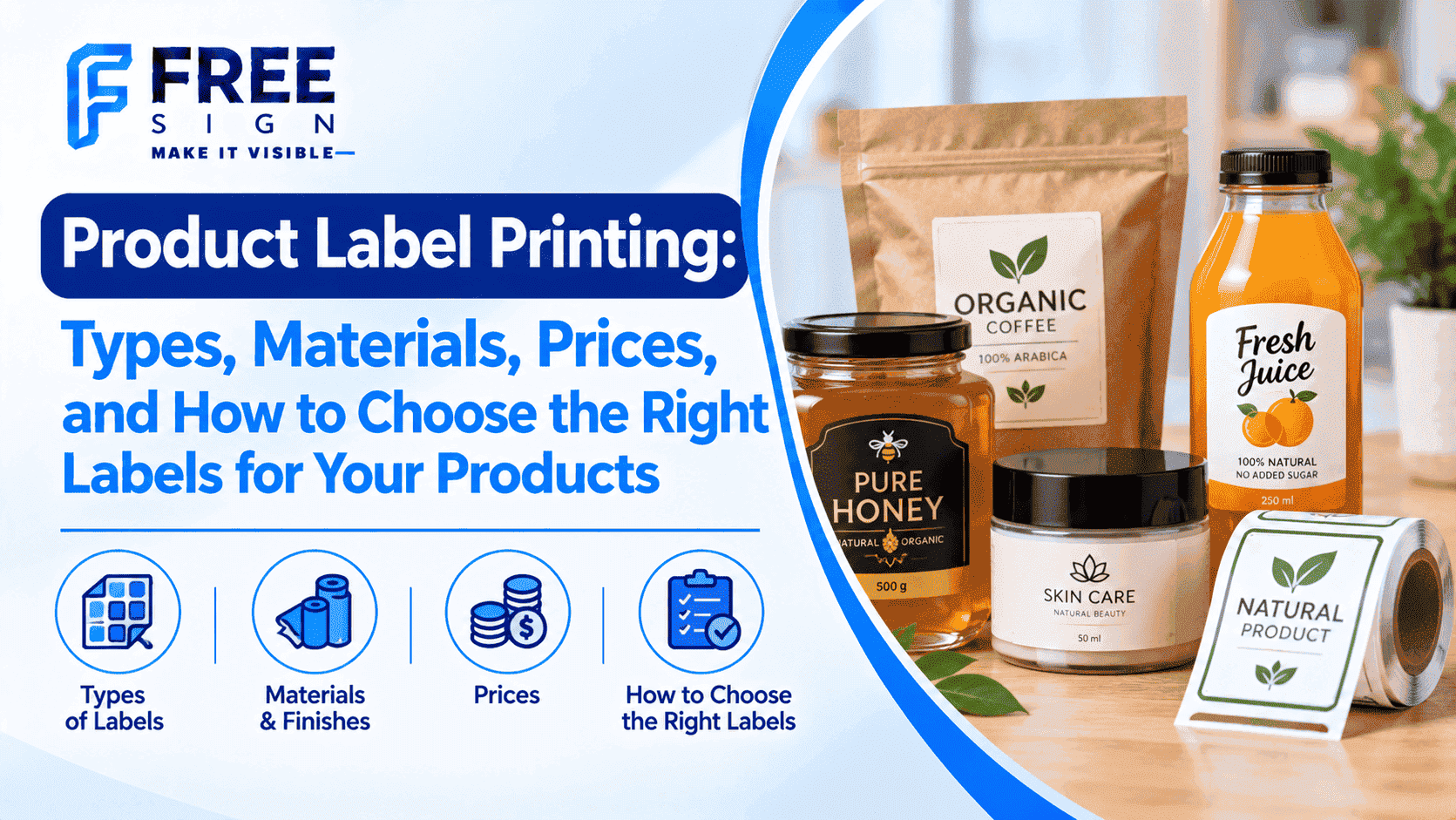
Do you have a quality product but feel that its packaging does not reflect its value? The design and print quality of your product labels can make a significant difference in how customers perceive your brand. Product Label Printing helps businesses showcase their brand identity, display essential product information, and create more professional packaging. Whether you sell food products, perfumes, cosmetics, or handmade items, choosing the right label material, size, and design can make your products stand out in a competitive market.
What Is Product Label Printing?
Product label printing is the process of producing adhesive labels that display a product’s name, brand logo, required information, and other visual elements. These labels are then applied to bottles, jars, boxes, plastic containers, glass packaging, and other product surfaces.
Labels can be produced using different materials, including paper and synthetic materials such as vinyl. The choice of material, adhesive, and finish depends on the product, packaging surface, storage conditions, and intended use.
Product labels do more than improve packaging appearance. They help customers identify products, recognize brands, and access important information in a clear and organized format.
Why Is Professional Product Label Printing Important?
Product labels play an important role in packaging, marketing, and brand recognition, particularly in competitive markets where businesses need to distinguish their products.
1. Strengthens Brand Identity
Product labels provide space to display your company logo, brand colors, product name, and other visual elements. Using a consistent design across different products makes your brand easier for customers to recognize.
2. Improves Product Packaging
Even a simple container can look more attractive with a professionally designed label. This is particularly useful for perfumes, honey jars, coffee packages, cosmetics, and gift products.
3. Displays Essential Product Information
Labels can include product names, ingredients, instructions, company details, barcodes, production dates, and expiry dates, depending on the product category and applicable regulations.
4. Supports Marketing Campaigns
Promotional labels can highlight discounts, special offers, new product launches, and seasonal campaigns. Businesses can also use branded stickers on shopping bags, shipping boxes, and product packaging.
5. Creates Consistency Across Product Lines
If your business sells several products or different sizes of the same product, a consistent label design helps create a unified brand appearance while allowing each product to display its own information.
Read also: Installing Raised Letters for Commercial Storefronts
What Are the Main Types of Product Labels?
Product labels are available in different materials, printing methods, shapes, and finishes. The right option depends on the packaging surface and the conditions in which the product will be stored and used.
1. Paper Product Labels
Paper labels are commonly used for products that do not require high resistance to moisture, water, or friction. They can be suitable for certain dry products, cardboard packaging, and indoor applications.
They support a variety of printed designs and colors and can be produced with different finishes, including matte and glossy options.
2. Vinyl Product Labels
Vinyl labels are a popular choice when businesses need a flexible material that can offer greater resistance than ordinary paper labels under certain conditions.
They can be applied to suitable plastic, glass, and metal surfaces. Vinyl labels are available in different colors and finishes, but their resistance to water, oils, heat, and abrasion depends on the specific material, adhesive, and protective coating.
3. Clear Product Labels
Clear labels are made from transparent materials that allow part of the packaging beneath them to remain visible.
They are often used on perfume bottles, cosmetic containers, and transparent packaging. These labels can create a clean and elegant appearance, particularly when the product’s color or packaging design is intended to remain visible.
4. Metallic Product Labels
Metallic labels are designed to give products a distinctive or premium appearance. They can be suitable for perfumes, gift products, luxury packaging, and selected product collections.
The material and finish should be selected according to the packaging surface, design requirements, and expected usage conditions.
5. Kraft Product Labels
Kraft labels have a natural paper appearance and are commonly used by brands that prefer a simple, handmade, or environmentally inspired visual identity.
They can be suitable for honey jars, coffee packaging, baked goods, and handmade products. The paper and adhesive should still be selected according to the packaging surface and storage environment.
6. Specialty and Embossed Product Labels
Special finishes can help highlight specific elements of a label, such as a company logo or product name. Options may include raised effects, selective gloss, and other decorative finishes.
These labels are useful when appearance is a major part of the product’s presentation. However, the additional finishing options should be considered alongside the project’s budget and practical requirements.
What Is the Best Material for Product Labels?
The best label material depends on the product, packaging surface, storage conditions, and expected handling. A material that works well for a dry food package may not be suitable for a refrigerated bottle or a cosmetic container exposed to moisture.
| Material | Suitable Applications | Important Considerations |
| Paper | Dry products and cardboard packaging | Moisture and water exposure |
| Vinyl | Selected containers requiring flexible labels | Adhesive type and required resistance |
| Clear material | Transparent bottles and packaging | Text visibility and color contrast |
| Metallic material | Perfumes, gifts, and premium products | Compatibility with the design and surface |
| Kraft paper | Natural and handmade product packaging | Readability and surface compatibility |
Before choosing a material, it is advisable to test a sample on the actual packaging. The final performance depends on how the material and adhesive interact with the container surface and storage conditions.
What Shapes Are Available for Product Labels?
Product labels can be printed in different shapes depending on the packaging design and the available application area.
Round Labels
Round labels are commonly used on jar lids, gift boxes, and small product containers. They are also suitable for displaying brand logos and short product names.
Rectangular Labels
Rectangular labels provide practical space for product information, ingredients, barcodes, and branding. They can be used on bottles, boxes, jars, and many other packaging types.
Square Labels
Square labels are suitable for simple designs, logos, and promotional stickers, particularly when the available packaging area is limited.
Custom-Shaped Labels
Custom-shaped labels are cut according to the outline of a specific design rather than a standard geometric shape. They can help highlight distinctive logos and product branding.
Read also: Modern Storefront Design
Which Products Need Custom Printed Labels?
Product label printing is used across many industries. The appropriate design and material depend on the product category and packaging requirements.
Food Product Labels
Food labels are used on honey jars, jam containers, sauces, coffee packages, dates, baked goods, and packaged meals.
The material should suit the product’s storage conditions. Special attention is needed when packaging may be exposed to moisture, refrigeration, or freezing.
Labels must also display the required product information in accordance with the applicable food labeling regulations.
Perfume and Cosmetic Labels
Perfume and cosmetic labels help display product names, brand identities, and required information on bottles and external packaging.
Transparent and metallic materials are sometimes selected to create an appearance that matches the product’s positioning. The design should also leave enough space for the information required for the relevant product category.
Coffee and Café Labels
Coffee brands and cafés can use printed labels on coffee bags, takeaway cups, bottled drinks, and packaged products.
Consistent use of logos, colors, and typography helps strengthen brand recognition across different packaging formats.
Candle and Gift Product Labels
Labels can add a brand name, product details, or a short message to candles, gift boxes, and handmade products.
Paper, kraft, and specialty finishes may be suitable depending on the desired appearance and packaging conditions.
E-commerce Product Labels
Online stores can use product labels on boxes, bags, and containers to display their logos and improve the unboxing experience.
They can also use identification labels, barcode stickers, and package-sealing labels as part of their order preparation process.
What Is the Difference Between Product Stickers and Roll Labels?
The terms product stickers and product labels are sometimes used interchangeably. However, the main difference often relates to how the labels are supplied and applied.
| Feature | Product Stickers | Roll Labels |
| Delivery format | Individual pieces, sheets, or custom-cut shapes | Labels supplied on rolls |
| Common applications | Small and medium projects with varied designs | Repeated labeling and production operations |
| Application | Manual application or suitable tools | Manual application or compatible labeling machines |
| Order requirements | Flexible quantities and formats | Practical for repeated labeling processes |
If you need a limited quantity or several different designs, individual labels or sheets may be suitable. If your business handles large quantities of products regularly, roll labels may offer a more practical solution, provided their dimensions and roll direction are compatible with your labeling equipment.
How Does the Product Label Printing Process Work?
Professional product label printing involves several stages to ensure that the final labels match the packaging, design, and intended application.
1. Identify the Product Information
The process starts by collecting all the information that needs to appear on the label. This may include the product name, company logo, ingredients, barcode, manufacturer details, and other required information.
2. Prepare the Label Design
The design is created according to the packaging dimensions and brand identity. Text, logos, and other elements should be positioned carefully, leaving enough space around the cutting edges.
3. Select the Material and Adhesive
The material should be selected according to the packaging surface, storage environment, and exposure to moisture, cold, or friction.
The adhesive is equally important because different plastic and curved containers may require different adhesive properties.
4. Review a Printing Sample
A sample helps verify the colors, text readability, dimensions, and finish before the full order is produced.
This step is particularly important when labels contain small text, detailed designs, or transparent materials.
5. Print and Cut the Labels
Once the design and material are approved, the labels are printed and cut into the required shapes. They can then be prepared as sheets, rolls, or individual pieces.
6. Inspect and Prepare the Order
The finished labels should be checked for print quality, cutting accuracy, and overall condition before delivery.
The final format should match the customer’s application method and packaging requirements.
How Much Does Product Label Printing Cost in Saudi Arabia?
There is no single fixed price for product label printing because each order has different specifications. The final cost depends on the material, dimensions, quantity, design, and delivery format.
The main factors that influence pricing include:
- Material Type: Paper, vinyl, transparent, and metallic materials have different costs.
- Label Size: Larger labels generally require more material and may affect production efficiency.
- Order Quantity: Small orders and large production runs may have different unit costs.
- Printing Colors: Detailed, full-color designs may involve different production requirements.
- Cutting Shape: Standard rectangular or round labels may have different production requirements from custom-shaped designs.
- Special Finishes: Glossy coatings, protective layers, and raised effects can increase the total cost.
- Delivery Format: Preparing labels as sheets, rolls, or individual pieces may affect the quotation.
To receive an accurate quotation, provide the supplier with the label dimensions, required quantity, packaging type, preferred material, and design file if available. These details make it easier to recommend a suitable printing solution and calculate the actual project cost.
Learn more about Free Sign’s Recent Projects
How Do You Choose the Right Product Label Printing Company?
Choosing a printing supplier should not depend on price alone. You also need to consider material quality, printing accuracy, cutting precision, and the supplier’s ability to meet your packaging requirements.
1. Review Previous Work Samples
Ask to see examples of similar projects. Pay attention to text clarity, color accuracy, cutting quality, and finishing.
2. Ask About Available Materials
Make sure the supplier can offer materials suitable for your packaging surface and product conditions. Do not choose a material based only on its appearance.
3. Confirm the Label Dimensions
The label should fit the available packaging area without covering important details or creating wrinkles when applied to curved surfaces.
4. Request Design Approval Before Printing
Reviewing a design proof or sample is especially important when the label includes small text, barcodes, or detailed product information.
5. Compare Quality and Cost
The lowest quotation is not necessarily the best choice. An unsuitable material may lead to peeling, damaged printing, or labels that are difficult to read.
What Information Should Be Included on a Product Label?
The information required on a product label depends on the product category and the regulations governing its sale.
Depending on the product, a label may include:
- Product name and brand identity.
- Manufacturer or distributor details.
- Ingredients or product composition, where applicable.
- Net weight, volume, or quantity.
- Instructions for use and storage.
- Relevant warnings and precautions.
- Country of origin.
- Production date, expiry date, and batch number, where required.
- Barcode or other product identification details.
Important: Businesses selling food, cosmetics, or other regulated products in Saudi Arabia should review the requirements that apply to their specific product category before approving a label design. Product information, language requirements, and mandatory declarations should be checked before printing. A professionally printed label does not replace regulatory compliance.
How Do You Prepare Your Product Label Design for Printing?
Preparing the design correctly can reduce production errors and unnecessary revisions.
- Use a clear logo with sufficient resolution for printing.
- Choose colors that match your brand identity.
- Make sure the font size allows customers to read the information.
- Leave a safe margin between text and cutting edges.
- Check spelling, numbers, and barcodes before approval.
- Confirm the final label dimensions against the actual packaging.
- Request a sample application before printing a large quantity.
It is also useful to keep an approved copy of each product label design. This makes future reprints and updates easier when product information changes.
Why Are Product Labels an Important Part of Your Brand Identity?
A product label is one of the first visual elements customers notice when they see or handle a product. Its design can influence how the product is presented, how easily customers recognize the brand, and how consistent the packaging looks across a product range.
When you choose the right material, a clear design, and accurate printing, the label becomes more than a simple sticker. It becomes a practical branding tool that helps communicate your product identity and present your business professionally.
If you are launching a new product or improving your existing packaging, start by identifying the product type, container dimensions, and required information. Then select the material and design that best suit your needs.
Frequently Asked Questions About Product Label Printing
What Is the Best Type of Label for Products?
There is no single best label for every product. Paper labels may be suitable for certain dry products, while vinyl may be a better option for containers that require greater resistance to moisture or friction. The right choice depends on the packaging surface and storage conditions.
Can Product Labels Be Printed With a Custom Logo?
Yes. Custom product labels can include your company logo, brand colors, product name, and required information. You can also select the label size, shape, material, and finish according to your packaging.
Can You Print Transparent Labels for Bottles?
Yes. Transparent labels can be used on suitable bottles and containers. However, the design and ink colors should provide enough contrast to keep the text and important elements readable.
Are Product Labels Available on Rolls?
Yes. Some product labels can be supplied on rolls, making them practical for repeated labeling operations and production lines that use compatible labeling machines.
Are Product Labels Waterproof?
Water resistance depends on the material, adhesive, and protective finish. Some labels are designed to withstand moisture or limited water exposure, while untreated paper labels may become damaged when exposed to water.
Can Product Labels Be Printed in Custom Shapes?
Yes. Labels can be cut according to the outline of a logo or design instead of using standard shapes. The artwork should include suitable cutting margins and dimensions.
What Information Is Needed to Get a Product Label Printing Quote?
You will generally need to provide the product type, packaging dimensions, label size, quantity, preferred material, cutting shape, delivery format, and design file if available.
Conclusion
Product Label Printing helps businesses present their products professionally, strengthen brand recognition, and communicate important information clearly. However, achieving a good result requires more than an attractive design. You also need to choose suitable materials, confirm the correct dimensions, and review the artwork and product information before printing.
Whether you are launching a new product or upgrading your existing packaging, investing in carefully designed and professionally printed labels can help your products stand out and make your brand easier for customers to recognize.