
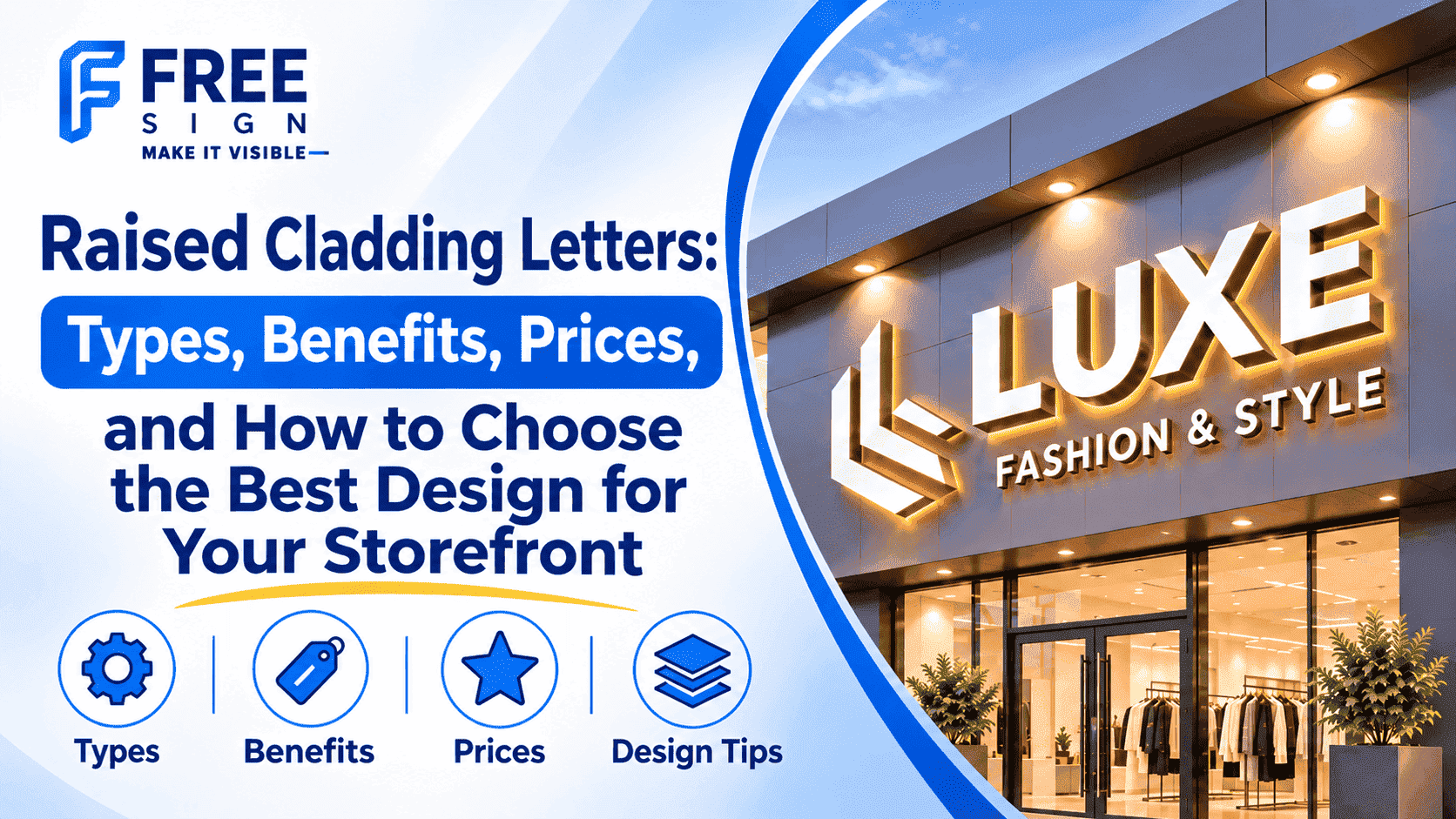
Are you looking for a storefront design that combines a modern appearance with a professional finish and attracts customers’ attention? Raised Cladding Letters are a popular signage solution for commercial storefronts and business facades because they combine cladding panels, which create a consistent exterior surface, with three-dimensional lettering that highlights the business name and visual identity. These letters are available in different materials, sizes, lighting options, and finishes. Understanding their types, costs, and selection criteria can help you create a storefront that suits your business and budget.
What Are Raised Cladding Letters?
Raised Cladding Letters are three-dimensional letters installed on a facade covered with cladding panels. They are used to display a store name, company name, or commercial logo in a clear and attractive way.
Each element serves a different purpose. Cladding is used to cover and finish the facade, creating a consistent surface, while raised letters display the business name and add depth to the overall design.
These letters can be manufactured using different materials, such as acrylic, stainless steel, and aluminum. They can also include front or backlighting, depending on the selected design.
How Are Raised Cladding Letters Manufactured?
The manufacturing and installation process usually involves several essential stages:
- Design and inspection: The business name, logo, and required dimensions are determined, followed by an inspection of the facade and installation area.
- Material selection: The appropriate cladding panels, letter materials, and finishes are selected according to the project requirements.
- Letter fabrication: The materials are cut, shaped, and assembled to create three-dimensional letters.
- Lighting preparation: LED modules and electrical connections are installed if the design includes illuminated letters.
- Facade preparation: The cladding panels and supporting structure are inspected to determine the appropriate letter-mounting method.
- Installation and inspection: The letters are securely mounted, and their alignment, finish, and lighting performance are checked.
What Are the Types of Raised Cladding Letters?
Raised Cladding Letters are available in different styles and materials. The right option depends on the type of business, storefront design, and available budget.
1. Raised Acrylic Letters
Acrylic letters are among the most common options for commercial signage because they are lightweight, available in various colors, and suitable for different shapes and designs.
They can be used for both illuminated and non-illuminated signs. Acrylic can also be combined with other materials to create designs that offer a modern appearance and clear lighting.
2. Raised Stainless Steel Letters
Stainless steel letters are known for their elegant metallic appearance, making them suitable for companies, hotels, and retail stores looking for a premium storefront design.
They are available in different finishes, including gold, silver, polished, and matte. They can also be manufactured with front or backlighting, depending on the required design.
3. Raised Aluminum Letters
Aluminum is lightweight and can be shaped and finished in different colors, making it suitable for various indoor and outdoor signage applications.
It is commonly used to create dimensional letters that require a practical material with flexible design and finishing options.
4. Raised Galvanized Steel Letters
Galvanized steel can be used to manufacture raised letters with suitable protective coatings and finishes.
It may be considered for projects where letter size and budget are important factors. However, the quality of fabrication, surface preparation, and protective coating is essential, especially for outdoor installations.
5. Raised Letters Combining Different Materials
Some signage designs combine acrylic and metal materials to achieve a distinctive appearance. For example, an illuminated acrylic face can be combined with metallic sides to create dimensional letters with a modern finish.
The appropriate combination depends on the letter dimensions, installation location, and desired visual effect.
Read also: Installing Raised Letters for Commercial Storefronts
What Are the Lighting Options for Raised Cladding Letters?
Raised Cladding Letters can be manufactured with different lighting arrangements to make business names more visible, particularly during evening hours.
1. Front-Lit Raised Letters
Front-lit letters produce light through the front face of each letter. Acrylic is commonly used for the illuminated front section because it allows light to pass through.
This lighting style is suitable for retail stores, restaurants, and cafes that want their business names to remain clearly visible from the street.
2. Backlit Raised Letters
Also known as halo-lit or reverse-lit letters, this style directs light toward the cladding surface behind the letters. The light creates a glowing outline around each letter.
Backlit letters are often selected by companies and hotels that prefer a subtle and elegant lighting effect.
3. Front and Backlit Raised Letters
This option combines front illumination with backlighting, creating a more noticeable visual effect.
The brightness and light distribution should be carefully adjusted to keep the letters readable without producing excessive glare.
4. Non-Illuminated Raised Letters
Non-illuminated letters do not contain internal lighting. Their three-dimensional appearance comes from their depth and the shadows created around them.
They are suitable for locations with sufficient external lighting or businesses that prefer a simple storefront design without integrated illumination.
What Are the Benefits of Installing Raised Letters on Cladding?
Combining cladding panels with three-dimensional lettering improves the appearance of a commercial facade and helps communicate the business’s visual identity.
1. A Modern and Professional Storefront
Cladding creates a consistent facade, while raised letters add depth and visual interest. Together, they give the storefront a more organized and professional appearance.
2. Better Business Name Visibility
Three-dimensional letters make a business name more noticeable than flat lettering, particularly when the appropriate size and readable font are selected.
3. Different Colors and Design Options
Businesses can choose from different cladding colors and letter finishes. This makes it easier to coordinate the storefront with the company’s logo and visual identity.
4. Optional Lighting
Raised letters can be manufactured with front lighting, backlighting, or without illumination. This flexibility allows businesses to select a design according to their operating hours and visibility requirements.
5. A Consistent Facade Background
Cladding creates a uniform background for letters and logos. It can also be used to update the appearance of an existing storefront when a different exterior design is needed.
6. Suitable for Different Commercial Activities
Raised Cladding Letters can be used for retail stores, restaurants, cafes, showrooms, clinics, hotels, offices, and corporate buildings.
What Is the Difference Between Cladding and Raised Letters?
Although these two elements are often used together in storefront designs, they serve different purposes.
| Comparison | Cladding | Raised Letters |
| Main purpose | Covers and finishes the building facade | Displays the business name or logo |
| Appearance | Flat surface | Three-dimensional lettering |
| Materials | Aluminum composite panels and other facade materials | Acrylic, stainless steel, aluminum, and steel |
| Lighting | Does not illuminate letters by itself | Can be illuminated or non-illuminated |
| Installation | Fixed to a supporting facade structure | Mounted on cladding or another suitable surface |
| Main application | Creates the facade background and finish | Highlights the business identity |
In simple terms, cladding provides the background that gives the storefront its finished appearance, while raised letters display the store or company’s name on that surface.
Read also: Modern Storefront Design
Where Can Raised Cladding Letters Be Used?
These letters are suitable for a wide range of commercial activities. Common applications include:
- Retail store facades: To display store names and attract customers’ attention.
- Restaurants and cafes: To highlight business names and create a distinctive storefront.
- Companies and offices: To display corporate identities and company names on building facades.
- Hotels: To create an elegant appearance around entrances and exterior walls.
- Clinics and medical centers: To make business locations easier to identify and provide professional signage.
- Showrooms and exhibition spaces: To create attractive facades that highlight the business brand.
The installation location and the distance from which customers will view the sign should be considered before selecting letter dimensions and lighting options.
How Much Do Raised Cladding Letters Cost in Saudi Arabia?
The price of Raised Cladding Letters in Saudi Arabia varies from one project to another. There is no fixed cost for every storefront because the total price depends on the cladding area, letter materials, dimensions, lighting system, and installation requirements.
What Factors Affect the Cost of Raised Cladding Letters?
1. Cladding Facade Area
The total facade area affects the quantity of panels and materials required, as well as the labor and installation time.
2. Letter Size and Quantity
Larger letters and signs containing more characters generally require additional materials and fabrication work.
3. Letter Materials
Acrylic, stainless steel, aluminum, and galvanized steel have different material and manufacturing costs. Custom finishes may also affect the final price.
4. Lighting System
Illuminated letters require LED modules, electrical connections, and suitable protective components. The selected lighting arrangement can therefore influence the total project cost.
5. Cladding Panel Finish
The color, finish, and technical specifications of cladding panels can affect the overall cost of the facade.
6. Installation Complexity and Location
Installation costs depend on building height, access to the facade, supporting structures, and any additional electrical work required.
To receive an accurate quotation, provide the signage company with the facade dimensions, a photograph of the installation location, your business logo, preferred materials, and lighting requirements.
Learn more about Free Sign’s Recent Projects
How Do You Choose the Best Raised Cladding Letters for Your Storefront?
Choosing the right letters is not only about appearance. You should also consider your business type, installation location, budget, and material quality.
1. Choose a Design That Matches Your Brand Identity
The cladding and letter colors should complement your business logo and visual identity.
For example, gold metallic letters may suit luxury businesses, while colorful acrylic letters may be more appropriate for modern retail stores and cafes.
2. Select Materials Suitable for the Installation Location
Outdoor facades are exposed to sunlight, heat, dust, and moisture. Coastal areas may also expose signage materials to salt and chloride-containing conditions.
Choose materials and finishes that are suitable for the surrounding environment, and consider fabrication quality and protective treatments.
3. Select the Appropriate Letter Depth
Letter depth affects the three-dimensional appearance and the shadows created around each character.
The depth should be proportional to the letter size and facade area to avoid a crowded or unbalanced design.
4. Choose the Right Lighting System
If the store operates during evening hours, illuminated letters may improve its visibility. You can choose between front and backlighting depending on the desired appearance.
It is important to select suitable brightness levels so that the business name remains readable without creating excessive glare.
5. Check the Supporting Structure and Mounting Method
The cladding system and supporting structure should be inspected before installing the letters. The fixing method must be appropriate for the weight and dimensions of the sign.
Cladding panels should not automatically be assumed to support every type of letter installation without checking the structural requirements.
6. Review the Design Before Manufacturing
Request a design mockup showing the storefront after the cladding and letters have been installed. The preview should include colors, dimensions, spacing, and lighting arrangements.
This step helps identify any changes before production begins and reduces the possibility of installation errors.
7. Check Applicable Signage Regulations
Before installing an exterior sign, review the municipal and regulatory requirements applicable to the project location. You should also check any additional requirements imposed by the property owner or shopping center.
How Do You Maintain Raised Cladding Letters?
Regular maintenance helps preserve the appearance of the facade and the performance of the lettering.
- Clean the cladding regularly: Remove dust and dirt using cleaning methods suitable for the panel material and finish.
- Use appropriate cleaning products: Avoid abrasive tools and chemicals that may damage the panel coating or letter surfaces.
- Inspect mounting points: Check for loose components or visible damage to the fixing system.
- Check the lighting: Inspect LED modules and identify any failed components or uneven brightness.
- Inspect electrical connections: Ensure that wiring, connections, and power supplies remain protected from moisture and outdoor conditions.
- Inspect the facade after severe weather: Check the cladding and letters for visible damage following strong winds or storms.
Maintenance frequency depends on the materials used, the installation location, and the level of environmental exposure.
Why Choose Free Sign for Your Storefront Signage?
Creating a successful commercial storefront requires more than selecting attractive materials. It involves careful planning that considers the facade area, visual identity, letter type, and installation method.
When planning your project with Free Sign, explain your facade dimensions, preferred cladding finish, raised letter style, and whether you need front or backlighting.
Reviewing these details before fabrication can help you select a design that suits your business and the requirements of the installation location.
You can explore Free Sign’s shop signage installation services in Jeddah to learn more about commercial signage solutions.
Frequently Asked Questions About Raised Cladding Letters
Can Raised Letters Be Installed on Existing Cladding?
Yes. Raised letters can often be installed on an existing cladding facade. However, the condition of the panels, supporting structure, letter weight, and appropriate mounting method should be inspected before installation.
Can Cladding and Raised Letters Be Made in Different Colors?
Yes. You can choose a different color for the cladding panels and raised letters. This creates visual contrast and helps highlight the business name while maintaining the company’s visual identity.
Are Raised Cladding Letters Suitable for Outdoor Use?
Yes. They are commonly used on exterior commercial facades, provided that the materials, finishes, mounting systems, and electrical components are suitable for the surrounding environmental conditions.
Can Lighting Be Added to Raised Cladding Letters?
Yes. Raised letters can include front lighting, backlighting, or a combination of both. The right option depends on the letter material, design, and desired visual effect.
Is Cladding Necessary for Installing Raised Letters?
No. Raised letters can be installed on other suitable surfaces, including stone, concrete, and properly prepared facades. However, cladding provides a consistent background that can improve the overall appearance of the storefront.
Conclusion
Raised Cladding Letters are a practical signage solution for creating modern and professional storefronts. They combine the consistent appearance of cladding panels with the dimensional look of raised lettering. Different materials, finishes, and lighting options allow businesses to customize their signs according to their needs.
Before selecting a design, consider the letter material, dimensions, lighting system, mounting method, installation environment, and applicable signage regulations.